The Saturday Debrief: Volume 3
March 30, 2026 · 3 min read · field-notessaturday-debrief
Something happened this week that I didn't expect.
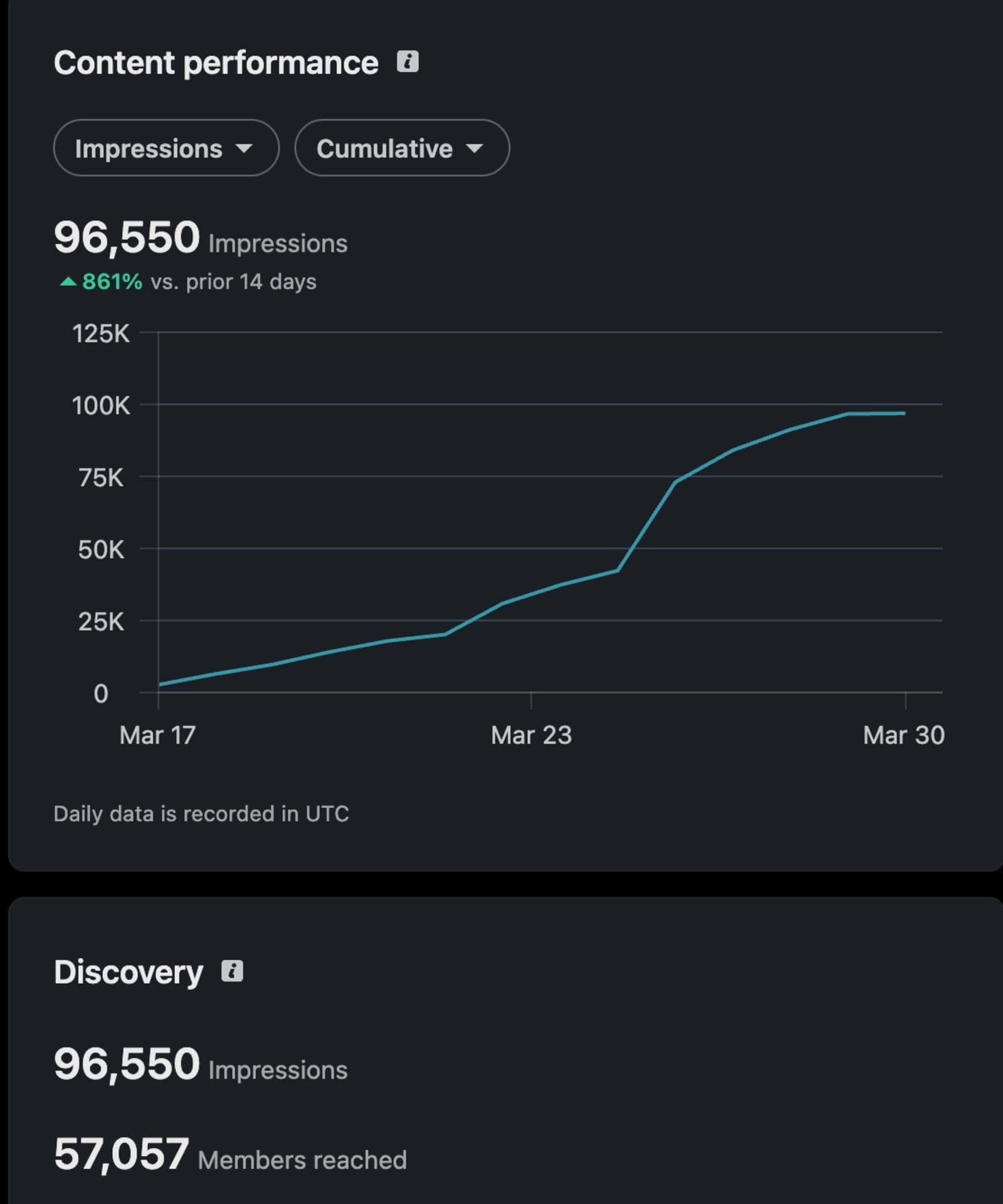
A post I wrote about noticing something strange in my team's work hit 53,000 impressions. No research citations. No framework. No credentials mentioned. Just a manager describing what they were seeing across their desk.
That number stopped me cold.
For context, my previous best was around 8,000. This wasn't an incremental improvement. It was a different category of response entirely.
So I've been sitting with the question all week: why that post? Why now?
What I think happened
The post didn't teach anything. It didn't cite a study. It didn't position me as an expert with thirty years of field experience and three letters after my name.
It just described something real that a lot of people are privately experiencing but haven't seen named in public yet.
Managers noticing that the work looks polished but the thinking isn't there. That people can describe what the output says but can't tell you why. That AI has quietly inserted itself between the worker and the work in a way that feels productive and isn't.
That observation resonated because it's true and because almost nobody in a leadership position wants to say it out loud. It feels like a criticism of their team. It feels like an indictment of a technology everyone has committed to. It feels like admitting something went wrong on their watch.
But it did go wrong. And the first step to fixing it is being willing to name it.
What the numbers actually mean
96,550 impressions across the past two weeks. Up 861% from the prior two weeks.
I want to be careful about how I interpret that. One viral post doesn't build a business. But it does tell you something about where the nerve endings are.
The people saving, commenting, and reposting that post are managers and senior leaders inside organizations that are living this problem right now. They aren't sharing it because it's clever. They're sharing it because it's true for them.
That's a different kind of signal than engagement on a post about ergonomics ROI or the Swiss Cheese Model. Those posts build credibility. This one built recognition.
Recognition is what converts readers into clients.
What I've been thinking about
There's a tension I keep coming back to.
The content that performs best is the most personal and the least polished. The content that feels most important, the science, the framework, the referenced research, performs more quietly.
I don't think the answer is to abandon the science. The science is what makes the personal observations credible rather than just anecdotal. Without thirty years of human factors research behind it, "I noticed my team's work looked polished but the thinking wasn't there" is just a manager complaining.
With it, it's a diagnosed organizational failure mode with a name and a solution.
The trick is sequencing. Lead with the human observation. Follow with the science. Let people feel recognized before you hand them the framework.
StoryBrand got there first. The hero has to feel seen before they'll accept a guide.
One thing worth your time
If you manage a team, ask yourself one question this week:
When was the last time someone on your team showed you their thinking, not their output?
If you can't remember, that's worth paying attention to.